What is jirai-kei? A primer for international readers
Note: sizing notes and fit reports reflect personal experience. Please confirm details on the official brand site before purchasing.
Jirai-kei (地雷系) is a Tokyo-born fashion aesthetic that pairs sweet, doll-like styling with darker emotional cues. The name translates as “landmine type” — a tongue-in-cheek reference to the personality archetype the look originally signalled.
If you’ve landed on this site through a search and you’re not entirely sure what jirai-kei is yet, this primer is for you. It’s short on purpose.
The short version
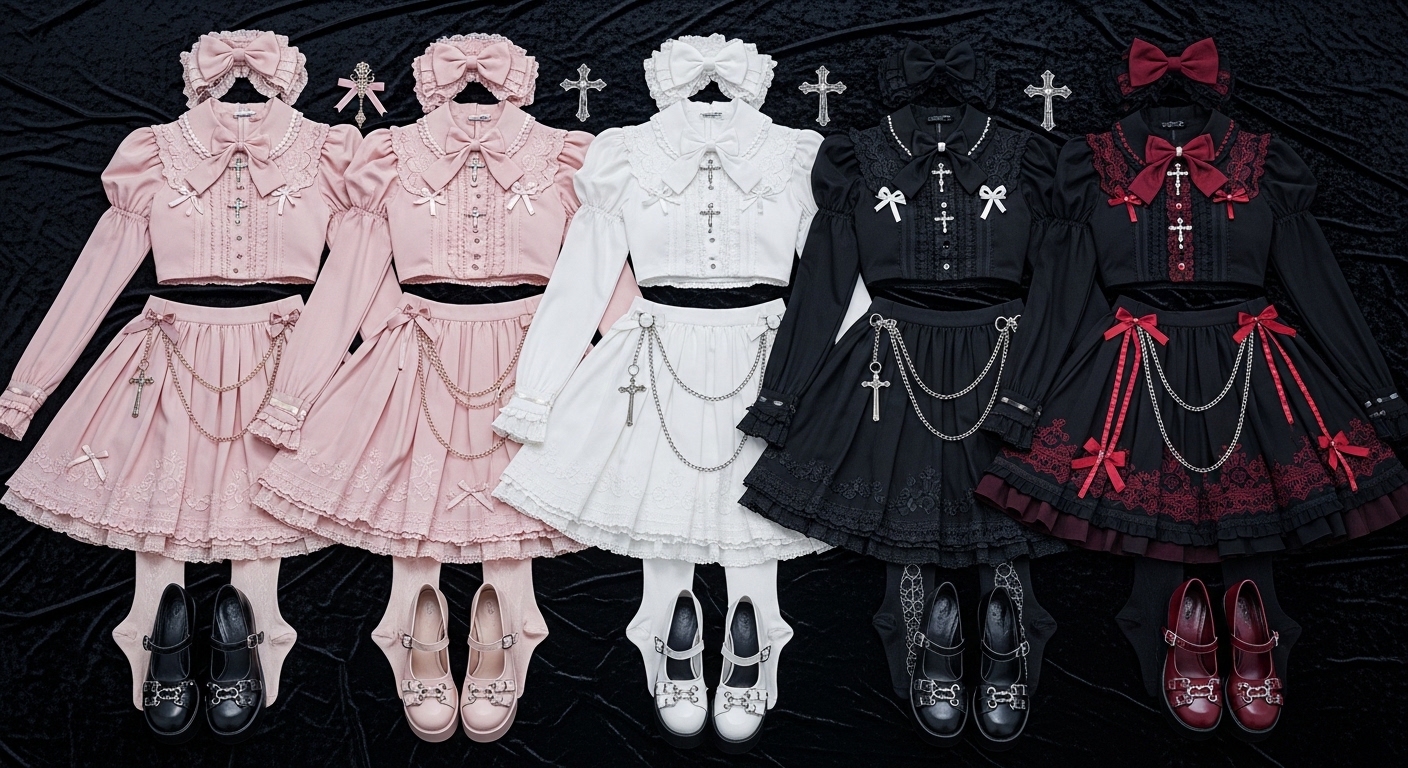
Pink and black, lace and ribbons, platforms, twin tails. The aesthetic of a doll who might also break your heart.
The visual vocabulary of jirai-kei is consistent enough that you can recognise it on sight:
- A short A-line or tiered dress, usually in dark colours (black, burgundy, navy) with white or pink accents.
- A blouse or cardigan with lace, frills, or a bow at the throat.
- Platform Mary Jane shoes, usually 6–8 cm tall.
- Twin tails or low pigtails, often tied with oversized satin ribbons.
- Heavy “byojaku” (frail, soft-bruise) eye makeup — pink eyeshadow, lower-lash mascara, sometimes faux teardrop liner.
- A specific air of cute but unsettled.
It’s closely related to ryousangata (量産型, “mass-produced type” — sweeter and more idol-fan-leaning) and yamikawa (病みかわ, “sick-cute” — darker and more graphic). The lines between them are blurry; many people mix elements freely.
A very brief history
Jirai-kei crystallised in the late 2010s around Shinjuku’s Kabukichō district, in venues frequented by host-club clientele and idol fans.
The term jirai onna (landmine girl) predates the fashion — it was internet slang for a romantic partner who seems sweet but is emotionally explosive. By the late 2010s the term had migrated to describe a specific look adopted by women in Tokyo who frequented host clubs and underground idol shows. The visual language drew from sweet lolita, gyaru, and early 2000s “byojaku” aesthetics, then settled into its own thing.
The look went mainstream on Japanese TikTok and Twitter through 2021–2022, and is now a recognised genre carried by multiple brands. Calling someone “jirai onna” is no longer mostly an insult — it’s also a self-identifier.
Jirai-kei vs ryousangata vs lolita
These three aesthetics overlap visually but have different centres of gravity. It helps to know which one you’re actually drawn to.
| Aesthetic | Centre of gravity | Typical silhouette |
|---|---|---|
| Lolita (ロリータ) | Historical / doll, formal construction | Bell-shaped, knee-length, blouse + JSK + petticoat |
| Ryousangata (量産型) | Idol-fan, sweetness, accessibility | Short A-line dress + cardigan, pastel palette |
| Jirai-kei (地雷系) | Dark cuteness, emotional cue, host-club adjacent | Short A-line dress + platforms, black with pink |
There’s no rule against mixing. A common combination is ryousangata base + jirai-kei accessories, or lolita dresses worn with jirai-kei makeup.
Is it for me?
Jirai-kei doesn’t require a particular age, body, or background. It does require a willingness to be visible.
A few things to know before you commit:
- The look is conspicuous. People will look at you on the train. Most people are friendly about it.
- It rewards repetition. You’ll know within a month of trying it on whether the silhouette feels like yours.
- It’s not a personality test. You don’t have to “be a jirai girl” to wear jirai-kei.
If you’re curious, the cheapest experiment is: one black A-line dress, one ribbon, one pair of Mary Jane shoes, twin tails for a day. Wear it once and see how you feel.
Where to start on this site
Three pieces that will help you go from “curious” to “owning your first dress.”
- How to measure yourself for Japanese fashion — the cm-based measurements every Japanese brand expects you to know.
- Brand index — the brands that carry jirai-kei pieces, with notes on sizing.
- Platform shoes guide — the part of the outfit that decides whether you can walk home or not.
In short
Jirai-kei is a specific, recognisable Japanese fashion aesthetic with a Tokyo neighbourhood it emerged from and a small set of consistent visual cues. You don’t need a backstory to wear it. You just need clothes that fit, shoes that walk, and a willingness to be seen.
Sources / further reading
- Editorial primer by the Yumekawa Plus team.
- General reference: Japanese-language fashion magazines and SNS coverage from 2021–2026.
スポンサーリンク
Tags
スポンサーリンク